Balashi Gold Mill is one of those places in Aruba where history and landscape come together in a simple but interesting way. At first, it might look like just a few old stone ruins. But once you know the story behind it, the place feels completely different.
Located near Spanish Lagoon, these ruins are part of Aruba’s gold mining past. Gold was discovered on the island in the 19th century, and Balashi became one of the main places where it was processed.
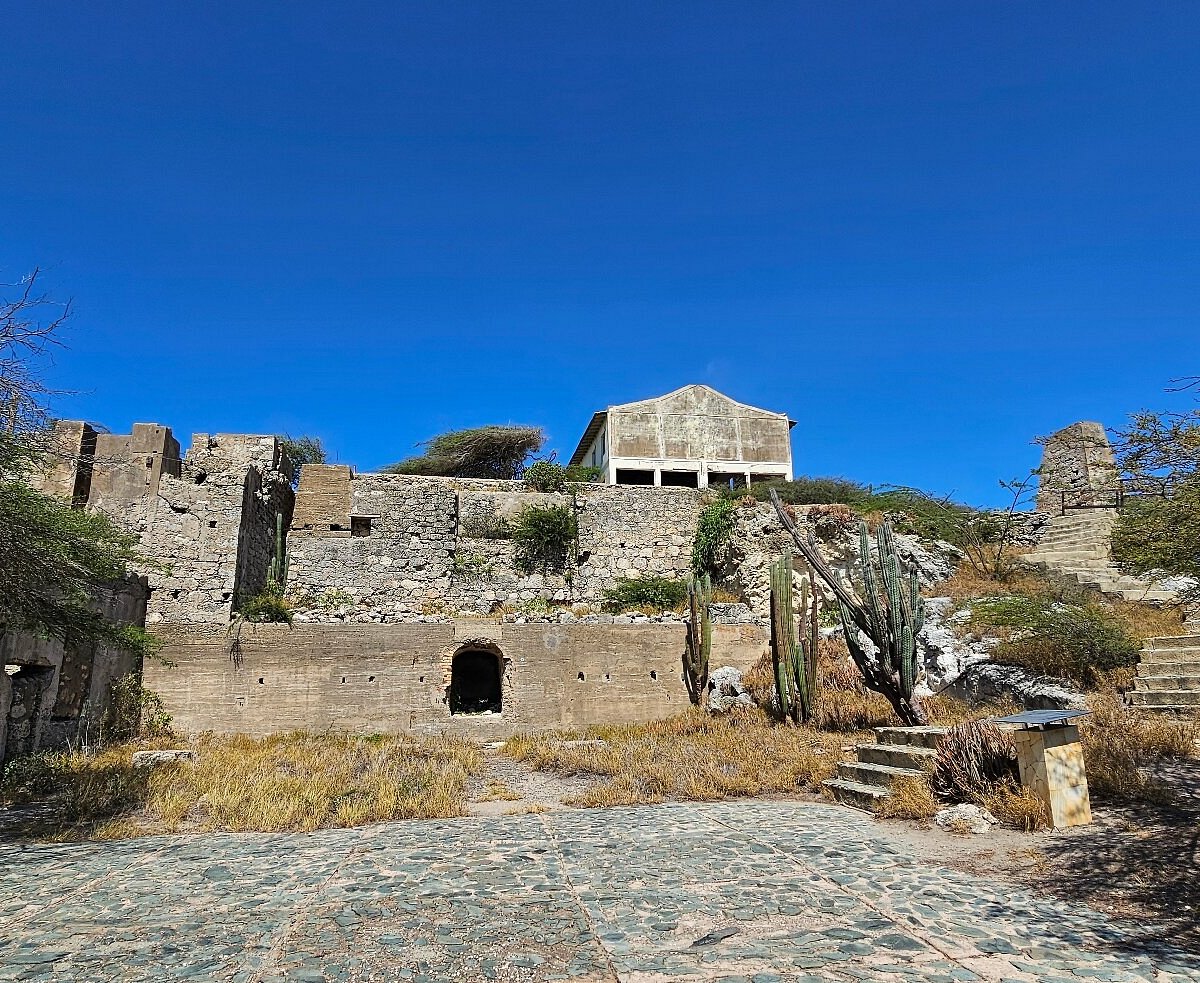
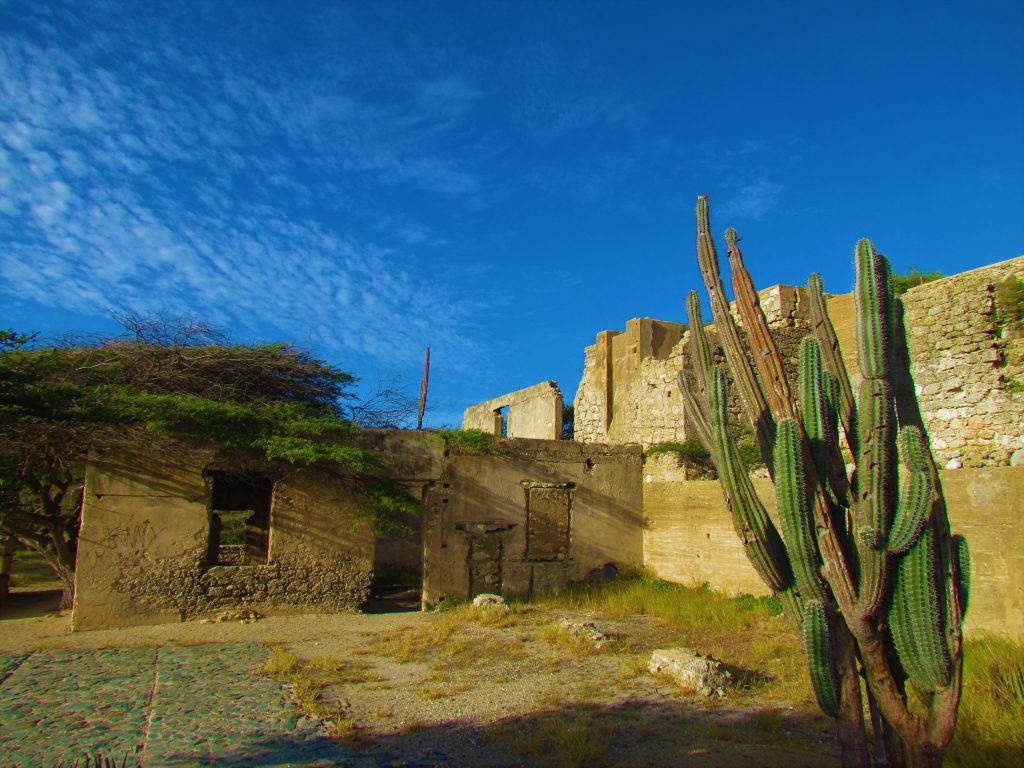
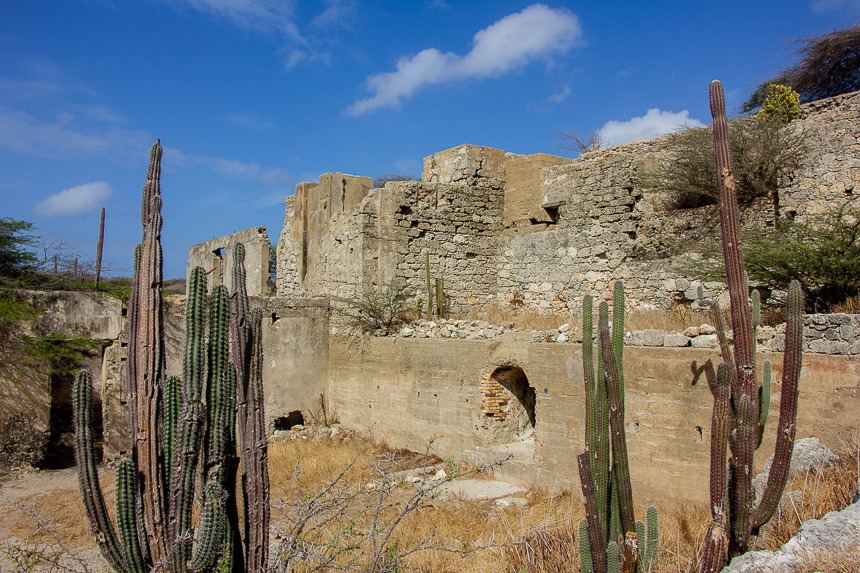
Today, what remains are parts of the old smelter — stone walls, arches, and structures that have been here for decades. They sit among cacti and open land, which makes the whole area feel quiet and slightly isolated.
Walking through the ruins is easy and doesn’t take much time. Still, it’s worth slowing down. You can look at the structures, imagine how the site once worked, and take in the views around you.
One of the best things about Balashi Gold Mill is how accessible it is. There are no tickets, no fences, and no crowds. You can walk right up to the ruins and explore freely.
It’s also a great place for photography. The mix of old stone walls, dry landscape, and bright blue sky creates a look that feels very different from Aruba’s beaches.
If you walk a bit further or climb slightly higher, you can see Spanish Lagoon in the distance. This adds another layer to the experience and shows how close history and nature are in this part of the island.
Many visitors combine this stop with nearby places like Frenchman’s Pass or Mangel Halto. Everything is close, so it’s easy to include in your route.
The best time to visit is early morning or late afternoon. The light is softer, temperatures are lower, and the area feels more comfortable. Midday can be very hot, especially with little shade around the ruins.
There are no facilities here, so it’s a good idea to bring water and wear comfortable shoes. The ground can be uneven in some spots.
Balashi Gold Mill isn’t a long stop, but it adds something different to your trip. It gives you a glimpse into a part of Aruba’s history that many people overlook.
And sometimes, those small pieces of history are what make a place more interesting than expected.